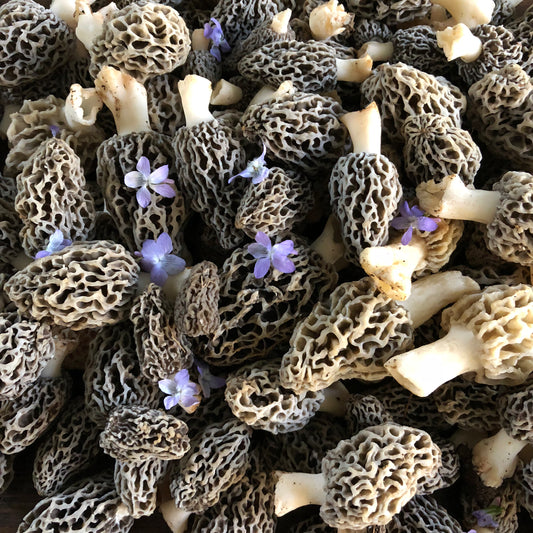
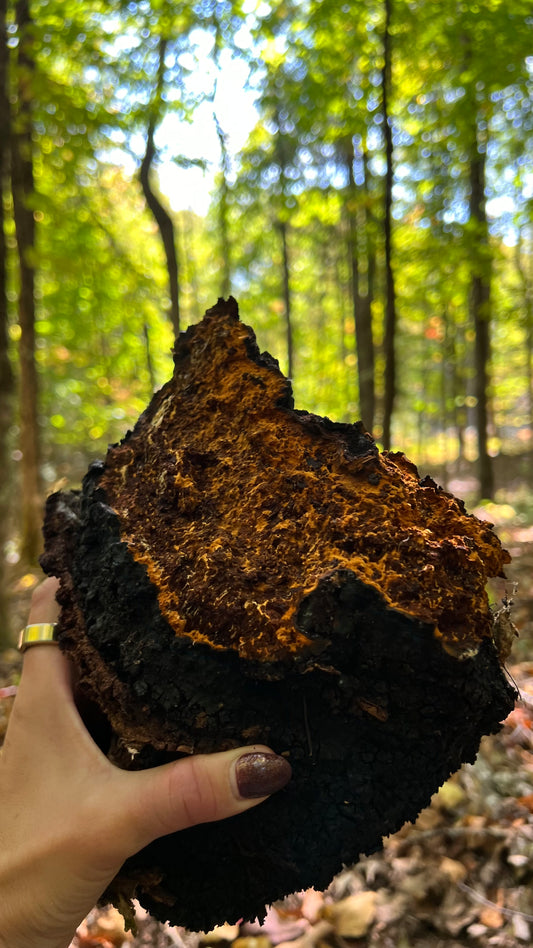
So what do foragers try to find? Mushrooms are at the top of the list, and some of the more ubiquitous ones that Madley seeks in the spring include turkey tails, oysters, black trumpets and the giant pheasant backs. She also gets excited about morels, which Madley jokes “look like tiny little brains,” but are highly prized by chefs because of their rich flavour. Native plants including ramps (leeks), garlic, trout lily, watercress and mint are all wild greens Madley says are easy to find in southern Ontario.
One easily identifiable edible that grows everywhere – much to the chagrin of gardeners – is the dandelion, which Madley explains is “an incredible food source, one of the most nutrient dense, and one of the most versatile from a culinary perspective.” She also encourages people to start thinking of trees as a source, as the seeds, blossoms and even young maple leaves can be cooked and eaten. “Trees are food too!” she says.
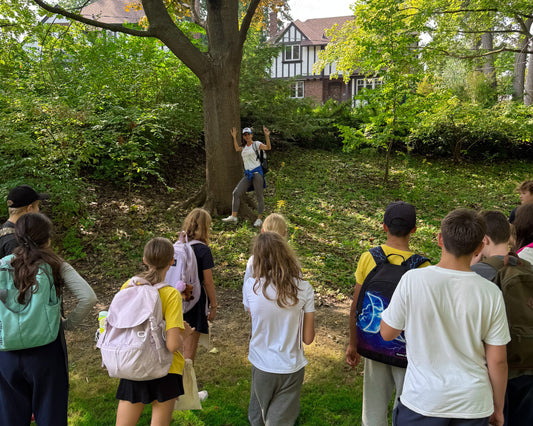
This Toronto resident, who spent much of her childhood in the forests of Creemore, is always mindful about sustainable harvesting, being careful not to deplete the plant or damage the root or bulb. “Like with fiddleheads, you only take two or three from each plant,” she explains. “If you find something delicious that you love, you want to be able to go back year after year and make sure you can still harvest that same bounty.”